
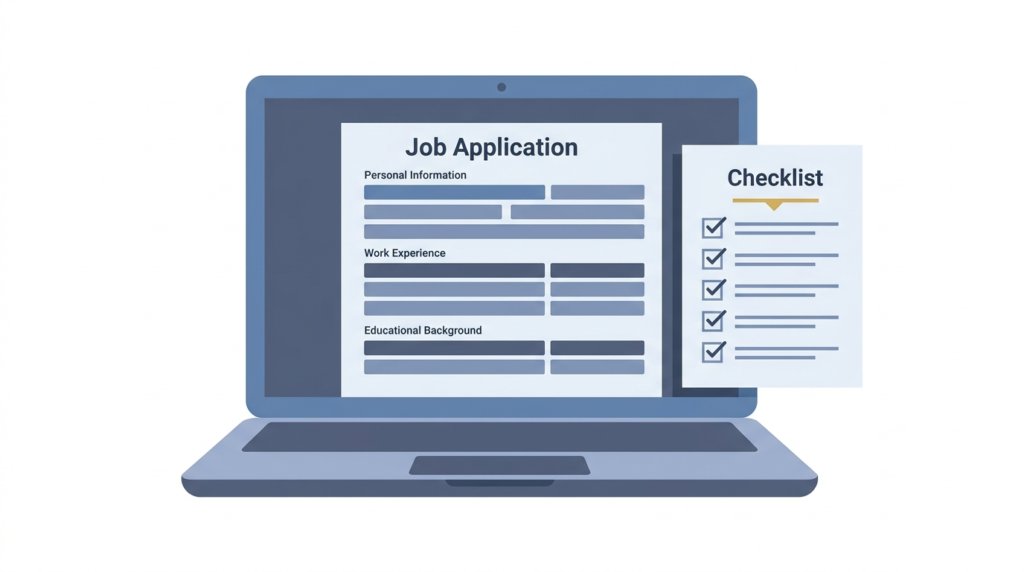
Applying for a federal job is not like applying for a private sector job. The resume is longer, the announcements are stricter, and the process is slower. None of that should put you off. It simply means you need to understand the system before you apply. This guide walks through the entire USAJOBS application process step by step, including the parts that reject most first time applicants.
Step 1: Create Your USAJOBS Account and Complete Your Profile
USAJOBS.gov is the official hiring site of the United States federal government. Every legitimate federal vacancy is posted there, and every application goes through it. Start by creating an account through Login.gov, which handles the sign in for USAJOBS. You will need an email address and a phone for two factor authentication.
Once inside, complete your profile fully. This matters more than people expect. The profile stores your citizenship status, veterans preference claim, federal employment history, and document library. Announcements use this information to determine your eligibility before a human ever reads your resume. An incomplete profile can silently filter you out of jobs you qualify for.
Step 2: Build a Federal Resume
A federal resume is the single biggest difference from private sector hiring. A normal one page resume will almost always fail. Federal resumes typically run three to five pages because human resources specialists must verify, in writing, that you meet every qualification requirement. If your resume does not state it, you do not have it. That is the rule reviewers work by.
For each job you list, include all of the following:
- Exact start and end dates, including the month and year
- Average hours worked per week, because part time experience is prorated
- Employer name, location, and your job title
- Salary, and for federal positions the series and grade
- Supervisor name and contact information, with a note on whether they may be contacted
- Detailed duties and accomplishments written in plain language, with numbers wherever possible
The hours per week detail trips up many applicants. If an announcement requires one year of specialized experience and you worked 20 hours per week, reviewers credit that as six months. State your hours clearly so you receive full credit for full time work.
Resume Builder or Uploaded Resume
USAJOBS lets you either build a resume inside the site or upload your own document. The built in resume builder is the safer choice for new applicants because it forces you to include every field that human resources specialists need. Uploaded resumes are fine once you know the requirements, and they give you more control over formatting. Whichever you choose, some agencies only accept one format, so always check the How to Apply section of the announcement.
Step 3: Read the Announcement Properly Before You Apply
Most rejected applications fail at this step, before anything is even submitted. Federal job announcements contain several fields that decide whether you are allowed to apply at all.
Who May Apply is the most important field on the page. “Open to the public” means any United States citizen can apply. “Federal employees” or “internal to an agency” means the job is restricted to people who already have civil service status. If you apply to an announcement you are not eligible for, you will be rejected automatically no matter how strong your resume is.
Series and grade describe the job category and pay level. The series is a four digit code for the occupation, such as 0301 for administrative work or 2210 for information technology. The grade, such as GS-7 or GS-11, sets the pay range and the experience required. Each grade generally requires one year of specialized experience equivalent to the next lower grade, so read the Qualifications section carefully to see what counts.
Closing date is strict. Some announcements also close early once they receive a set number of applications, which is common for popular positions. If an announcement says it will close after 200 applications, treat the posting date as the deadline and apply the same day if you can.
Appointment type tells you whether the job is permanent, term, or temporary. “Not to exceed” dates mean the position has a fixed end date, although many term positions are later extended or converted.
Step 4: Answer the Occupational Questionnaire Honestly and Fully
Most applications include a self assessment questionnaire where you rate your own experience on each duty, usually on a scale from no experience up to expert. Two rules apply here.
First, do not undersell yourself. The questionnaire score decides whether your application is rated qualified or best qualified, and only the best qualified group is usually referred to the hiring manager. If you have genuinely performed the task, claim the level you honestly meet, not the level that feels modest.
Second, your resume must support every answer. Human resources specialists compare your questionnaire ratings against your resume, and if you claim expert level skill that your resume never mentions, they are allowed to lower your rating. Inflated answers that the resume cannot back up are one of the most common reasons strong candidates drop out of the best qualified list.
Step 5: Attach Every Required Document
The Required Documents section of each announcement is a literal checklist. Missing one document makes the application incomplete, and incomplete applications are rejected without review. Depending on the announcement and your situation, you may need:
- Your resume
- Transcripts, if you are qualifying based on education, even unofficial copies in most cases
- SF-50, the Notification of Personnel Action, if you are a current or former federal employee
- DD-214 if you are claiming veterans preference, plus an SF-15 and a VA disability letter if you are claiming 10 point preference
- Licenses or certifications when the position requires them
Upload documents to your USAJOBS document library ahead of time so they are ready to attach. Photographs of documents are accepted if they are readable, but clean PDF scans are safer.
Step 6: Submit, Then Track Your Status
After you submit, the application status in your USAJOBS account updates as the agency processes it. The typical sequence is Received, then Reviewed, then Referred or Not Referred. Referred means your application was sent to the hiring manager, which is the goal of everything described above. Not Referred usually means you were rated qualified but not in the best qualified group, or you missed an eligibility requirement.
Be prepared for the timeline. Federal hiring routinely takes one to three months from the closing date before you hear anything meaningful, and longer for positions that require a security clearance or background investigation. Silence does not mean rejection. Keep applying to other announcements while you wait, because applying to a single posting and waiting is the slowest possible strategy.
A Note on Veterans Preference
Veterans preference gives eligible veterans extra consideration in competitive hiring, typically 5 points for qualifying service or 10 points for service connected disability. It is claimed in your profile and proven with your DD-214 and supporting documents. Preference does not guarantee selection, but it can decide placement on the referral list, so claim it properly if you are entitled to it. If you are a veteran, also look for announcements open to “veterans” under special hiring authorities such as VRA, which can bypass some competition entirely.
The Mistakes That Reject Most First Time Applicants
- Submitting a one page private sector resume without dates, hours, or detail
- Applying to announcements that are not open to the public when you have no federal status
- Underselling yourself on the questionnaire and missing the best qualified cutoff
- Claiming questionnaire levels that the resume does not support
- Missing one required document, most often transcripts or the SF-50
- Waiting on a single application instead of applying broadly
Every one of these is avoidable, and avoiding them puts you ahead of a large share of applicants immediately.
Final Word
The federal application process rewards people who read carefully and follow instructions exactly. That is genuinely the whole secret. Build a complete profile, write a detailed federal resume, apply only to announcements you are eligible for, answer the questionnaire honestly at the highest level you can support, attach every document, and keep applying while you wait. You can browse current federal openings updated daily right here on Job Army, and every listing links directly to its official USAJOBS announcement where you apply.
Written by Manahil Khan · Editor, Job Army
Manahil Khan researches and writes about United States federal hiring, the USAJOBS application process, and government careers. She runs Job Army, an independent job board that aggregates federal openings daily from official sources.
Leave a Reply